VIA Rail Toronto Maintenance Centre 2026: Operations, Services, Facilities & Rail Network Support
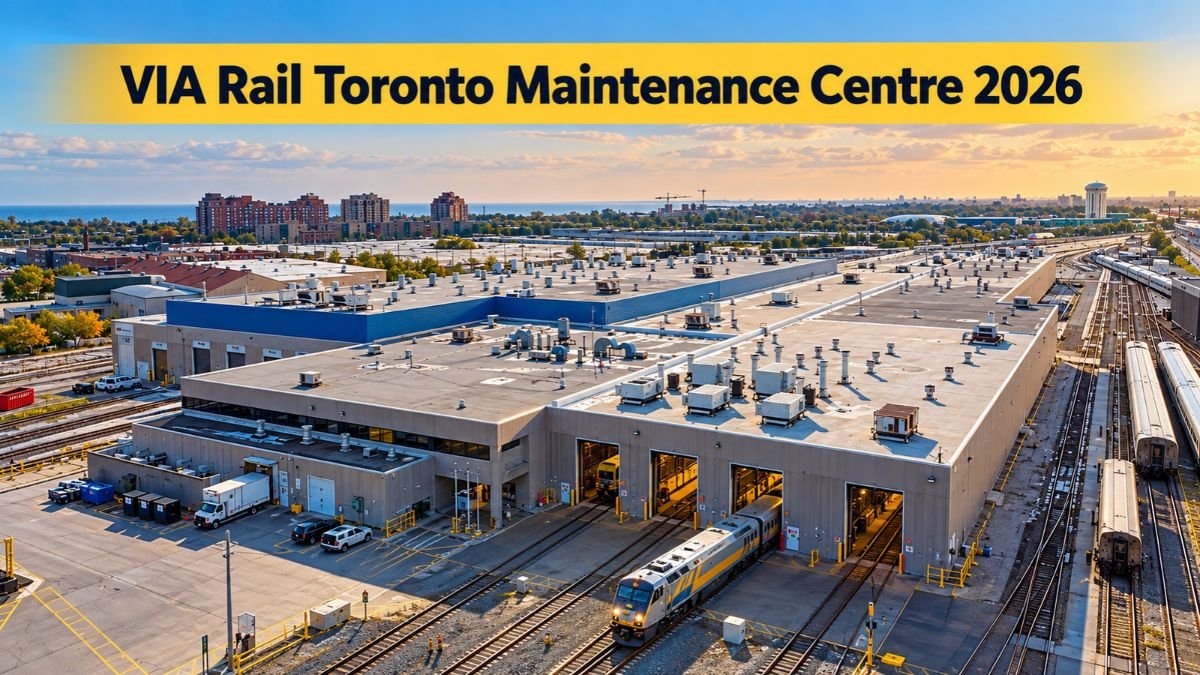
The VIA Rail Toronto Maintenance Centre (TMC) is an important railway maintenance facility in Etobicoke, Ontario. It supports the inspection, servicing and maintenance of VIA Rail trains, helping the passenger railway operator maintain its fleet and prepare trains for service across Canada.
In 2026, the centre’s modernization programme is a significant part of VIA Rail’s wider fleet renewal initiative. The project includes improvements to maintenance buildings, railway tracks, fuelling infrastructure and specialized equipment designed to support both existing trains and the new fleet operating in the Québec City–Windsor Corridor. VIA Rail’s published project information identifies 2026 as the anticipated completion year for the Toronto facility’s modernization.
For travellers researching VIA Rail facilities, this guide explains where the Toronto Maintenance Centre is located, what it does, how the modernization programme works, and how the maintenance facility differs from a passenger station. It also covers travel planning, ticket information and frequently asked questions.
Planning a VIA Rail journey? Compare available travel options, departure times and fare conditions before booking. For VIA Rail ticket deals enquiries, call +1 (888) 988-6792.
VIA Rail Toronto Maintenance Centre: Key Information
The following table summarises the main publicly available details about the facility and its modernization project.
| Detail | Information |
|---|---|
| Facility name | VIA Rail Toronto Maintenance Centre (TMC) |
| Street address | 50 Drummond Street |
| City | Etobicoke, Ontario, Canada |
| Postal code | M8V 4B5 |
| Primary purpose | Train servicing, inspection and maintenance |
| Main project | Modernization of maintenance infrastructure |
| Modernisation timeline | Anticipated completion in 2026 |
| Fleet supported | Existing trains and the new Corridor fleet |
| Passenger ticket office | Not a regular passenger ticketing location |
| Public access | A railway maintenance site; access should not be assumed without permission |
VIA Rail’s official corporate website publishes the address and project details. The anticipated completion date refers to the project timeline, not confirmation that every construction activity has been completed.
Where Is the VIA Rail Toronto Maintenance Centre Located?
The Toronto Maintenance Centre is located at 50 Drummond Street, Etobicoke, Ontario, M8V 4B5. It is in Toronto’s west end, in the Etobicoke-Lakeshore area, near Islington Avenue and the Gardiner Expressway.
The facility occupies a railway yard rather than a conventional passenger station. Its location allows VIA Rail to perform technical and operational work on trains away from passenger boarding areas.
How to Find the Facility
Travellers looking for the maintenance centre should distinguish it from Toronto Union Station, VIA Rail’s main passenger station in downtown Toronto.
| Location | Purpose | Suitable for passengers? |
|---|---|---|
| Toronto Maintenance Centre, Etobicoke | Train maintenance, servicing and technical operations | Not a regular passenger boarding location |
| Toronto Union Station, downtown Toronto | Passenger departures, arrivals, ticketing and station services | Yes |
| Other VIA Rail stations | Passenger boarding and alighting along designated routes | Yes, subject to the station’s services |
If you are travelling by train, use the station named on your ticket rather than navigating to the maintenance centre. Toronto Union Station is located at 65 Front Street West, Toronto.
Can You Visit the Toronto Maintenance Centre?
The Toronto Maintenance Centre is an operational railway facility, not a public tourist attraction. Visitors should not assume that they can enter the yard, inspect trains or access maintenance buildings.
If you have a business appointment, a contractor visit or another authorized reason to attend, confirm access arrangements with the relevant VIA Rail department in advance. Railway yards contain active tracks, heavy equipment and restricted work areas, so visitors must follow the site’s safety and access requirements.
Train enthusiasts who want to photograph or experience VIA Rail passenger services should instead look for permitted public viewing locations and passenger stations, while respecting railway property boundaries.
What Does the VIA Rail Toronto Maintenance Centre Do?
The centre plays an important role in keeping VIA Rail’s trains suitable for passenger service. Railway maintenance involves more than repairing a train after a problem occurs. It also includes planned inspections, equipment servicing and technical checks intended to identify issues before they affect operations.
VIA Rail’s Toronto facility supports maintenance of the existing fleet and is being upgraded to accommodate its new Corridor trainsets. The modernization project is designed to improve the infrastructure and equipment available to maintenance teams.
Train Inspection and Preventive Maintenance
Regular inspections help maintenance personnel assess the condition of train components and identify work that needs attention. The precise tasks depend on the vehicle, its maintenance requirements and the inspection being performed.
Maintenance activities can include:
- Examining mechanical components and equipment.
- Checking systems that support safe and reliable train operation.
- Identifying wear, damage or faults that require further assessment.
- Performing scheduled servicing and repairs.
- Recording maintenance work and verifying that required checks have been completed.
These are general examples of railway maintenance activities, rather than a confirmed list of every task performed during every visit to the Toronto facility.
Mechanical Repairs and Servicing
Passenger trains contain numerous interconnected systems. Maintaining them can require specialist tools, suitable work areas, and trained personnel.
A dedicated maintenance centre gives railway teams space to inspect equipment, carry out repairs and prepare trains for their next scheduled service. The Toronto centre’s infrastructure improvements are intended to support these activities for both the current fleet and newer trainsets.
Wheel Maintenance and Railway Equipment
One specific feature of the Toronto modernization project is a stand-alone wheel lathe facility.
Wheel lathes are specialized machines that restore the required wheel profile through controlled machining when maintenance procedures require it. Maintaining the appropriate wheel profile is an important part of railway vehicle upkeep.
Adding a dedicated facility is intended to improve the centre’s ability to support wheel maintenance. It is part of a wider infrastructure programme, not the project’s sole purpose.
Supporting Train Availability
A passenger railway must coordinate maintenance with its operating timetable. Trains need to be available for scheduled journeys while also receiving the inspections and servicing required for reliable operation.
Maintenance infrastructure helps railway teams organize this work. Modernized buildings, tracks, and equipment can support better fleet operations.
However, a maintenance upgrade does not guarantee that every train will operate without delays or that all services will run to schedule. Passengers should continue to check their own journey details and service advisories.
VIA Rail Toronto Maintenance Centre Modernization 2026
The Toronto Maintenance Centre modernization project forms part of VIA Rail’s broader programme to renew its Corridor fleet and adapt its maintenance facilities to support the new trains.
VIA Rail announced the construction programme in 2023, describing the work as an investment in the infrastructure needed to maintain 32 new trainsets for the Québec City–Windsor Corridor. The published project timeline identifies 2026 as the anticipated completion year.
Why Is the Maintenance Centre Being Modernized?
New passenger trains require suitable maintenance facilities, tools and supporting infrastructure. Modernizing the centre aligns the railway’s technical facilities with the new fleet’s requirements while allowing maintenance work on existing trains to continue.
The programme is intended to support several objectives:
- Improve the infrastructure available for train inspection and servicing.
- Adapt maintenance facilities to accommodate the new Corridor fleet.
- Upgrade railway tracks and equipment within the maintenance yard.
- Introduce specialized facilities for wheel maintenance.
- Improve selected fuelling and stabling infrastructure.
- Support more proactive maintenance through updated equipment and measurement systems.
These improvements are part of the wider fleet replacement programme, not a project limited to building renovations.
Main Construction Activities
The official project description identifies several elements of the Toronto modernization work.
| Project component | What it involves | Intended purpose |
|---|---|---|
| Existing building modifications | Partial demolition and modifications to the main building | Adapt the facility to new maintenance requirements |
| New building addition | Construction of additional maintenance space | Support inspection and servicing activities |
| Track modifications | Removal, replacement and modification of tracks | Adapt railway infrastructure within the yard |
| Wheel lathe facility | Construction of a dedicated wheel-maintenance building | Support appropriate wheel-profile maintenance |
| Fuelling upgrades | Improvements to fuelling infrastructure | Support the servicing requirements of the fleet |
| Stabling upgrades | Improvements to areas used to position trains | Support train storage and operational preparation |
| Vehicle measurement systems | Installation of infrastructure and equipment supporting vehicle measurements | Assist technical monitoring and maintenance |
The table summarises the published scope of work. It does not confirm the completion status of each individual component as of October 2026.
What Is the Vehicle Equipment Measurement System?
The modernization project includes infrastructure for a Vehicle Equipment Measurement System (VEMS). VIA Rail describes this system as part of its effort to support proactive maintenance and identify potential equipment issues.
The broader principle behind equipment measurement systems is to collect technical information that maintenance personnel can use to assess vehicle condition. When integrated into appropriate maintenance procedures, such information can help teams identify issues that require further inspection.
The system should be understood as one component of a larger maintenance process. Equipment monitoring does not replace inspections, professional assessment or required repair work.
How Is Construction Managed Around an Active Railway Facility?
Modernizing a working maintenance centre presents practical challenges because existing trains must continue to receive maintenance while construction progresses.
VIA Rail’s published project information states that the Toronto and Montréal maintenance centres continue to support existing fleet maintenance during construction, with preparation for the new fleet taking place alongside the upgrades.
The work also involves managing potential impacts on nearby residents and businesses. VIA Rail has described measures relating to noise, vibration, air quality and dust monitoring, as well as planned access arrangements for construction activities.
These measures are relevant because railway maintenance and construction sites operate in established communities. Their purpose is to help manage construction impacts while allowing necessary work to proceed.
How the Modernization Could Benefit VIA Rail Passengers
The Toronto Maintenance Centre is not a passenger terminal, but its role is connected to the quality and reliability of passenger rail services.
The potential benefits of a modernized maintenance facility are mainly operational. They depend on how the upgraded infrastructure, equipment and maintenance processes are used once the relevant work is complete.
Improved Support for the New Corridor Fleet
VIA Rail’s new Corridor fleet is intended for services operating between Québec City and Windsor. Modernizing the Toronto and Montréal maintenance centres is part of preparing the railway’s infrastructure for these trainsets.
Suitable maintenance facilities can help support:
- Inspection and servicing of new trainsets.
- Maintenance work using equipment suited to the fleet.
- Training and adaptation of maintenance teams to newer equipment.
- Coordination between technical maintenance and train operations.
More Suitable Maintenance Equipment
Dedicated facilities and upgraded measurement systems give maintenance teams better tools to carry out specific tasks.
For example, a dedicated wheel lathe facility supports wheel maintenance, while vehicle measurement infrastructure helps monitor equipment condition. The practical benefit depends on the equipment’s capabilities, its integration into maintenance procedures, and the fleet’s condition.
Continued Maintenance of Existing Trains
Fleet renewal does not mean that every existing train is immediately removed from service. VIA Rail’s published project information describes the maintenance centres as supporting both existing trains and the new fleet du
This makes the modernization programme important for the transition between the current fleet and newer passenger trains.
Is the Toronto Maintenance Centre a VIA Rail Passenger Station?
No. The Toronto Maintenance Centre and Toronto Union Station serve different purposes.
The maintenance centre is where railway equipment is serviced and maintained. Union Station is a public passenger station where travellers can board trains, arrive at their destinations and access relevant station services.
If you are planning a trip from Toronto, use your ticket confirmation to identify the correct departure station. Do not assume that a train listed as departing from Toronto will depart from the maintenance centre.
How to Find VIA Rail Trains Departing from Toronto
Before travelling, check the following details:
- Departure station: Confirm the station name and address on your booking.
- Travel date: Make sure the departure date matches your itinerary.
- Departure time: Check your ticket and any available service updates.
- Arrival station: Verify the destination and any connection requirements.
- Fare conditions: Review the conditions for changes, cancellations and refunds.
- Passenger requirements: Check your baggage allowance and any accessibility arrangements you need.
Toronto Union Station is the main downtown passenger station for VIA Rail services in Toronto. Its official station page provides information about station facilities, accessibility and passenger services.
VIA Rail Ticket Deals: How to Plan Your Next Journey
Understanding the Toronto Maintenance Centre can help travellers learn more about railway operations, but passengers planning a train journey should focus on routes, departure times, available fares, and ticket conditions.
If you are planning a trip from Toronto, comparing your travel options before booking can help you choose an itinerary that suits your schedule and budget.
Compare Routes and Travel Dates
VIA Rail operates passenger services on several routes from Toronto. The most suitable option depends on your destination and the available timetable.
When comparing journeys, consider:
- Whether a direct service is available.
- The departure and arrival times.
- Total journey duration.
- The fare available for your selected date.
- The conditions attached to the fare.
- Any connection or onward transport requirements.
Fares and availability can vary by date, route, departure and fare category. A discount should not be assumed to apply to every journey.
Review Fare Conditions Before Booking
A low advertised fare is not necessarily the best option for every traveller. Some fares may have more restrictive change or cancellation conditions than others.
Before purchasing a ticket, check:
| What to compare | Why it matters |
|---|---|
| Total ticket price | Helps you compare the cost of available itineraries |
| Change conditions | Determines whether changes are permitted and whether fees or fare differences may apply |
| Cancellation policy | Explains whether a refund, credit or other outcome may be available |
| Baggage allowance | Helps you prepare for your journey and avoid unexpected issues |
| Seat and class options | Allows you to compare available comfort and service features |
| Departure and arrival times | Helps you plan connections and onward transport |
Enquire About VIA Rail Ticket Deals
If you would like assistance comparing available ticket options, you can call +1 (888) 988-6792 for VIA Rail ticket deals enquiries.
When enquiring, have your preferred route, travel dates, number of passengers and preferred departure times ready. Ask for the total fare, any applicable discount conditions, and the rules governing changes or cancellations before making a booking.
Promotional offers and fares should be verified for the specific journey. The telephone number above is provided as a ticket-deals enquiry contact; it should not be interpreted as confirmation that it is an official VIA Rail customer-service number or that a particular discount is available.